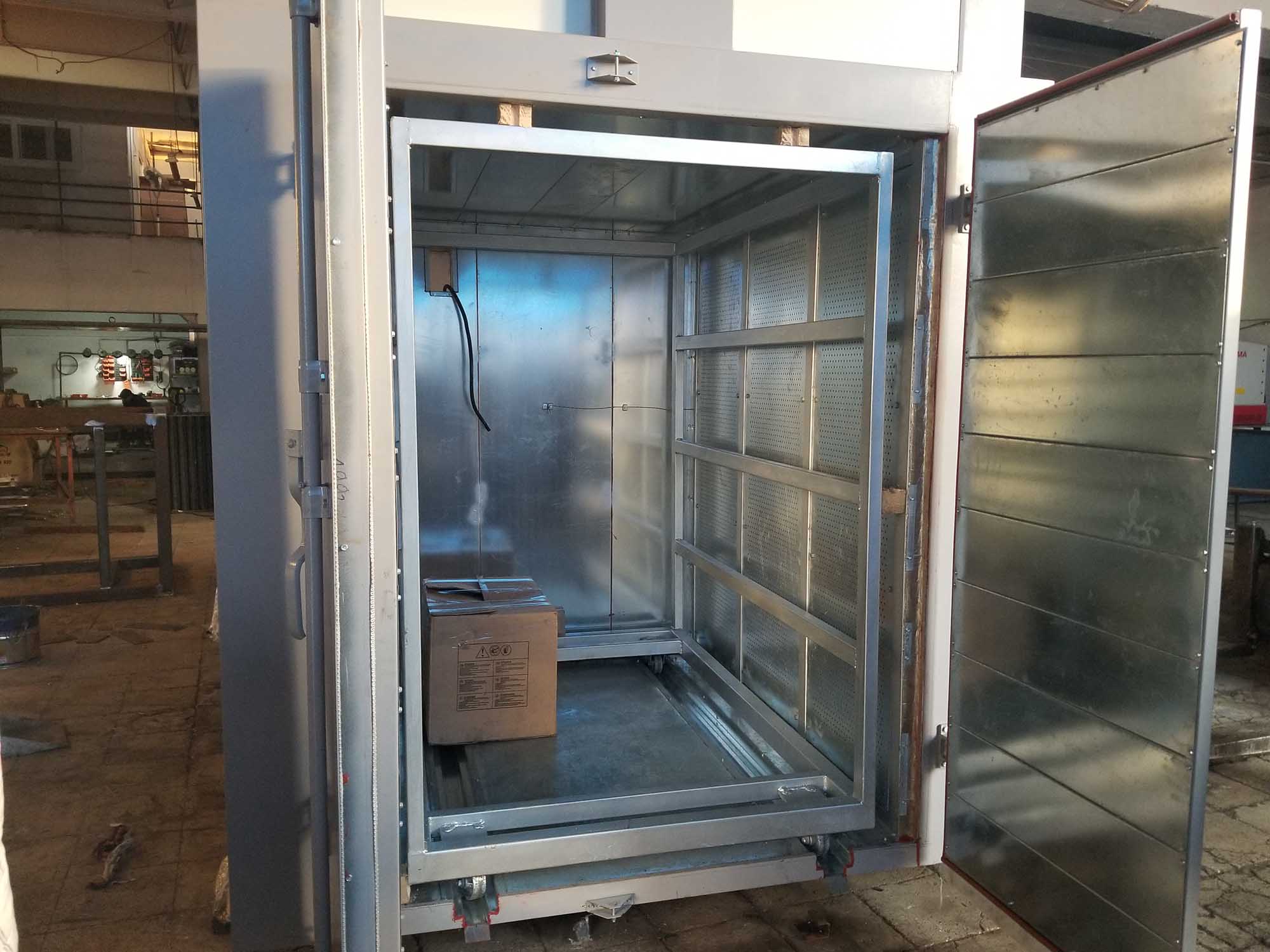
A fresh coat of paint might look even at first, but its final gloss depends heavily on how it cures. A paint curing oven provides the environment that determines how smooth, reflective, and consistent that finish becomes. Readers are often surprised by how many small temperature, airflow, and timing factors shape the outcome long before the coating hardens.
Preventing Surface Skinning Before Full Flow-out Happens
If the heated air inside an industrial curing oven rises too quickly, the coating can form a thin shell on top before the wet film has fully leveled. That early skin traps movement beneath the surface, locking in texture that should have settled out. When this happens, gloss levels vary from one section to another because the paint never reached its intended smoothness. Another part of this issue comes from coatings that begin to harden unevenly. Slower, controlled heat allows the entire film to flow-out at the same pace, helping pigments settle properly. Industrial curing ovens designed for gradual temperature ramp-up often prevent premature surface skinning that impacts gloss uniformity.
Ensuring Uniform Solvent Evaporation Rates
Different solvents evaporate at different speeds, and a paint curing oven must account for that. Uneven evaporation causes inconsistent surface tension, which ultimately shows up as dull patches or shiny streaks. A balanced curing chamber keeps the entire part drying at a steady rate so the finish reflects light evenly.
Another challenge occurs when trapped solvents push upward too late in the curing cycle. Properly tuned ovens maintain airflow that helps solvents escape at the right time, reducing hazing or loss of gloss in specific areas.
Avoiding Localized Over-baking or Under-baking Issues
A well-built industrial curing oven prevents temperature spikes that scorch the coating. Localized over-baking dulls reflections, alters color, and can even distort the film’s texture. In contrast, under-baked zones may remain soft, leading to uneven sheen once the surface meets light.
Heat distribution matters because temperature fluctuations widen the gap between high-gloss and low-gloss sections. A consistent cure from edge to center helps the entire painted part respond the same way under lighting conditions.
Minimizing the Introduction of Dust or Airborne Debris
Small particles settling into wet paint reduce gloss by breaking the smooth surface that light needs to reflect cleanly. Industrial curing ovens combat this by controlling airflow and filtering out contaminants. Debris embedded in the coating becomes tiny shadows that scatter light instead of reflecting it. Another factor involves movement within the chamber. If airflow pushes dust around, imperfections multiply quickly. Controlled, predictable circulation inside the oven reduces this risk and preserves finish uniformity.
Allowing Consistent Film Formation Across the Entire Surface
Film formation depends on steady heat and airflow so the coating can settle at a uniform thickness. If one area dries before another, the difference alters gloss level because thinner regions reflect light differently than thicker ones. Industrial curing ovens maintain the conditions that support even film development across complex shapes.
This balanced environment also helps binders and pigments align properly. When the coating sets evenly, the visual texture stays smooth and the gloss remains consistent.
Managing Air Circulation Patterns Within the Chamber Carefully
Air movement determines how efficiently heat transfers to the painted part. Excessive turbulence can create hot and cool pockets, while weak flow may leave sections under-cured. A paint curing oven with well-engineered circulation avoids these issues by guiding air along predictable paths. Airflow alignment also affects how solvents escape. If circulation pushes warm air across only part of the surface, the gloss shifts in that direction. A chamber with controlled circulation patterns avoids this mismatch.
Controlling the Cool-down Phase After Reaching Peak Cure Temperature
Once the surface reaches peak cure temperature, the cool-down stage helps lock in the final gloss. Rapid cooling can stress the coating, causing minor distortions that affect reflectivity. A controlled cool-down inside an industrial curing oven lets the film stabilize gradually. Additionally, slow temperature reduction prevents micro-cracking in thicker coatings. Even small stresses change how light bounces off the surface, reducing gloss consistency.
Eliminating Microscopic Surface Irregularities via Controlled Heating
Controlled heating smooths out tiny peaks and waves within the coating. When the temperature rises evenly, the paint relaxes into a flatter surface that reflects light uniformly. Industrial curing ovens enable this micro-level refinement through stable heat distribution. Small irregularities may seem insignificant, but they create a visible mismatch when the final gloss is examined under direct lighting. By reducing these distortions, the curing process enhances overall finish quality. For facilities needing dependable equipment that supports this level of performance, Reliant Finishing Systems provides industrial curing ovens designed for consistent, repeatable results.